
Breast Reconstruction Surgery in Chicago
We offer breast reconstruction for women who have undergone mastectomy or lost breast tissue due to medical conditions.
The first thing to know—this surgery can truly help restore both your body and confidence.
There are several options for breast reconstruction:
Breast Reconstruction
Breast Reconstruction Surgery Chicago
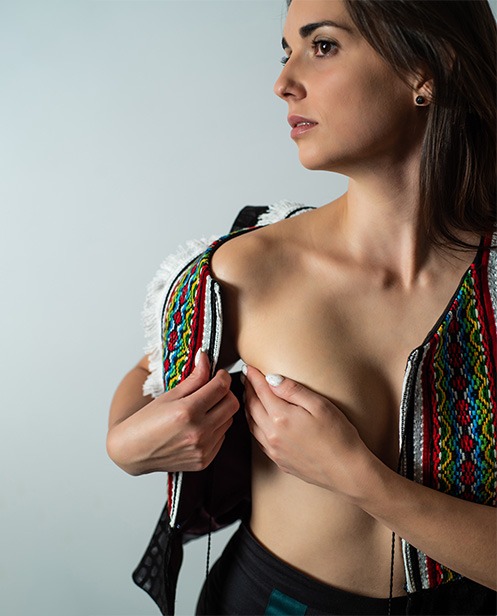
There are several options for breast reconstruction:
- TRAM Flap – uses tissue from your lower abdomen to recreate your breast.
- Latissimus Dorsi Flap – uses tissue from your back for reconstruction.
- Microvascular ‘Free’ Flap – transfers tissue from other parts of your body with advanced techniques to create a natural-looking breast.
Why consider breast reconstruction?
It helps restore a sense of wholeness and balance after mastectomy. Many women report improved physical and emotional well-being. While it cannot fully replicate a natural breast, the goal is to create the closest possible likeness—helping you feel like yourself again.
What’s great about modern reconstruction?
Customizable to you – surgeons tailor the procedure to your body type and needs.
Natural results – using your own tissue or implants, the reconstructed breast can look and feel natural.
Boosts confidence – many women find it improves posture, symmetry, and self-esteem.
Our Chicago breast reconstruction clinic offers expert care in Barrington, Oak Brook, Orland Park, and surrounding areas. Our specialized surgeons focus on precision, safety, and results that make a real difference.
In my opinion, breast reconstruction is not just about appearance—it’s about restoring balance, comfort, and confidence.
The difference in procedures is the extent of scarring. Flaps are used during a simple lift procedure. Fat transfer is used for patients who desire a more fullness over their buttock area. During the fat transfer procedure, the removed fat is placed deeply within the muscle and in many different layers to create a smooth surface without irregularities. It is common for surgeons to perform liposuction as well to enhance the shape of the buttocks.
Fat grafting has changed buttock enhancement to be a simpler procedure, performed within 1.5 hours, with minimal pain, discomfort, and recovery time. Candidates for this surgery are usually 18 years or older and in good physical health.
BRAZILIAN BUTT LIFT PRE-OPERATION
If you are a smoker, your surgeon will strongly urge you to quit at least six weeks before your surgery as smoking can interfere with the healing process and the viability of the fat grafts. Also, medications that can increase the risk of bleeding should be stopped. As this surgery is performed as an outpatient procedure under general anesthesia, it’s important to arrange for transportation.

Gallery
Photos
Explore Our before & after Gallery
Recovery timeline
Breast reconstruction recovery varies by procedure, but typically involves 1-2 days in the hospital for implant-based reconstruction, followed by a few weeks of limited activity and avoiding heavy lifting for 4-6 weeks. Autologous tissue (DIEP flap) reconstruction requires a longer hospital stay (2-5 days) and a longer recovery period of 4-6 weeks, with return to work depending on your job’s physical demands. Full recovery can take several months to a year, with gradual increases in activity and eventual fading of scars.
Hospital Stay
- Implant-based reconstruction: One to two days in the hospital to manage pain and monitor for complications.
- Autologous tissue (DIEP flap) reconstruction: A longer hospital stay, usually three to five days, due to the more extensive nature of the surgery.
First Few Weeks (Weeks 1-4)
- Implant-based: Expect pain, soreness, and bruising. Drains are usually removed around day 10. You can increase light activity and walking as comfort allows. You may need a support bra.
- Tissue-based: You’ll still have drains and need rest and proper elevation. Focus on walking and gentle movement to encourage circulation.
Returning to Daily Life (Weeks 4-6)
- Implant-based: You may feel more normal and be released from some restrictions. Nerves damaged during surgery may start to “wake up,” causing new sensations or pain, which is normal.
- Tissue-based: Swelling and fatigue should diminish, and you may feel ready to resume more activities. Numbness, tightness, and itching are common as nerves and tissues heal.
Long-Term Recovery (Months 1-12+)
- Implant-based: You may feel significantly stronger.
- Tissue-based: Full strength is regained, and you gradually return to vigorous activities.
- Both types: Scars continue to fade, and you may have additional procedures, like nipple tattooing. Emotional adjustment can also be part of the long-term recovery process.
Success Stories
More than 90+ five-star reviews on Google
Trustindex verifies that the original source of the review is Google. Kali is literally the best. Sweet, accommodating, and always a pleasure. I’m on my second visit with her, and will be back for a third.! :-)Posted on GoogleTrustindex verifies that the original source of the review is Google. The kindest and the best doctor ever highly recommendedPosted on GoogleTrustindex verifies that the original source of the review is Google. Great place- very professionalPosted on GoogleTrustindex verifies that the original source of the review is Google. Everyone was nice and professionalPosted on GoogleTrustindex verifies that the original source of the review is Google. TLDR: 1. Everyone is super nice 2. They really CARE about you, they’re not like other people that are obviously just money hungry 3. Procedure itself was quick, but not rushed 4. The place itself is beautiful and incredibly professional looking 5. Amazing results, highly recommend Kali! Could not possibly have asked for a better experience!! Everyone was incredibly sweet and welcoming, from the people at the front desk to the nurse herself. Kali was an absolute pleasure to work with. Every time I see her she is just as happy and sweet as ever. She made me feel incredibly comfortable there. The way she spoke, it never felt like she was pushing anything on me or encouraging me to do more Botox than I wanted. Also I love that she had me do a 2-week follow-up appointment!! The last lady I went to for Botox did nothing like that, so the fact that Kali wanted to see me again to make sure everything was going alright felt really nice and it really shows just how much she cares. The time spent doing the actual injections was super fast. I think we spent more time talking about it than doing it. I was amazed by how fast the appointment flew by. But it never felt like she was rushing. She was clearly taking her time and making sure she did everything right, it’s just that she has the skills to be able to do it quickly. The place itself is beautiful! Super clean and very professional looking. Both the waiting room and the exam room were absolutely gorgeous. The exam room especially felt boujee. I’m really happy with my results!!! My forehead looks so much better now. The wrinkles are basically gone, but it’s not like my face is frozen in place. I truly got exactly what I wanted. For reference, I’m 28F (with significant sunbed tanning history in my teens) and got 30 units of Botox in my forehead/between brows.Posted on GoogleTrustindex verifies that the original source of the review is Google. Kali had good knowledge and is able to provide results that are subtle yet make a huge difference in terms of enhancing your features while aiming for ideal proportions. Highly recommend!Posted on GoogleTrustindex verifies that the original source of the review is Google. Kali has great knowledge and is able to provide results that are subtle while making a huge difference in enhancing ideal facial proportions. Highly recommend!Posted on GoogleTrustindex verifies that the original source of the review is Google. I have been coming to CIP for the past year and it has always been a wonderful experience! Iv had Botox, filler and a breast augmentation. Dr Patel and Kali are amazing, so knowledgeable and patient. I will always recommend.Posted on GoogleTrustindex verifies that the original source of the review is Google. I highly recommend - Kali is amazing and always does a great job with what I need!Posted on GoogleTrustindex verifies that the original source of the review is Google. Kali is amazing! I love how she takes the time to explain and makes my skin concerns important!
have a question?
Quick answers to questions you may have
What is breast reconstruction?
It’s a procedure to restore the shape and appearance of a breast after a mastectomy, which may involve using implants or tissue from another part of the body.
What is a tissue flap (e.g., DIEP)?
A tissue flap involves using skin, fat, and blood vessels from your own body, often the abdomen, to create a new breast.
What are the risks?
General surgical risks like bleeding, infection, and scarring are possible. Specific risks can include implant issues like hardening (capsular contracture), or flap failure.
Can the nipple and areola be reconstructed?
Yes, these can often be reconstructed in a separate, later procedure.
How will reconstruction affect my other breast?
You may choose to have surgery on the other breast to create symmetry, which would involve additional surgery, risks, and costs.
Free consultation with a Plastic Surgeon
Call Dr. Patel today for a free consultation
Getting Started with a Breast Reconstruction Surgery
Our doctors will review your situation and factors associated with your breast condition, chemotherapy, radiation therapy, and your general medical health.
Reconstructive options will be covered in detail during your consultation, so that you and our doctors can make an educated assessment of the various choices available, and together decide the best one for you.
Photographs will be taken before and after your surgery to plan the procedure and to record your progress.
What does the surgery involve?
Breast reconstruction is usually a two-stage operation. The first stage aims to establish a breast shape, while the second stage aims to refine the result, improving symmetry between the two breasts by making adjustments to the new breast or normal breast. It may also include nipple-areola reconstruction although sometimes the nipple-areola reconstruction is completed during a third stage.
There are generally two main categories of breast reconstruction surgery; either using an implant or tissue expander, or using tissue from your own body. Both methods have advantages and disadvantages and sometimes a combination of methods is necessary.
What are the advantages and disadvantages of breast reconstruction with an implant?
When reconstructing a breast with an implant, a silicone gel prosthesis is most commonly used. The advantage of this technique is that the procedure is less complex, with a shorter recovery time. The operation may be carried out as an outpatient or overnight stay procedure.
The result is a breast that can have an excellent shape and a relatively soft feel to the touch. The best results are achieved when the opposite side is also augmented with an implant to improve symmetry.
The disadvantage is that radiotherapy can increase complications with implants and, in the long term, further surgery may be necessary.
How does the tissue-expander method work?
This method takes advantage of the principle that skin is expandable (like an abdomen during pregnancy). An inflatable implant is placed under the skin (and/or muscle) and is gradually increased in volume by adding saline over a few weeks or months. This regular expansion is a simple, painless procedure that requires no anesthetic.
In some cases the expander may be deliberately over inflated by about 30 percent and left for three to four months to help achieve a more natural breast shape. A second operation is necessary to remove the expander and an implant of your choice is placed. Nipple areola reconstruction can often be done at the same time.
What are the advantages and disadvantages of the ’tissue expander’ method?
With the use of a tissue expander, breast reconstruction can achieve a more natural, shapely breast, as the tissue expander takes advantage of the skin’s ability to stretch. This gradual process takes place over a six to 10 week period.
The disadvantage of any implant reconstruction is that in every case the body forms a shell of scar tissue around the implant. In some cases, contraction of this scar can result in a firm, misshapen breast (capsular contracture) which can be corrected through additional surgery, but may recur.
The other main disadvantage of breast reconstruction with an implant is the risk of implant related infection. This might require removal of the implant for some months until the infection has settled.
Modern implants are made to very high standards and device failure is rare. During your consultation, our doctors will discuss detailed information on the risks of breast implants.
How does autogenous (own tissue) breast reconstruction work?
This method of breast reconstruction uses tissue (fat, muscle and skin) from another part of your body. Tissue is most commonly taken from the abdomen or back and transferred onto the chest wall to fashion a new breast.
What are the advantages and disadvantages of this method?
The obvious advantage of this method is a breast that is naturally soft and composed entirely of your own tissue. The breast can also be shaped or sculpted to produce a closer match to the opposite side. Another advantage is that once successfully completed, this a ‘permanent’ form of reconstruction.
The scar tissue that is associated with implants is not a problem with tissue reconstruction. The major disadvantage of tissue reconstruction is that it is a more complex operation requiring a longer recovery period.
Is it possible to have an immediate breast reconstruction at the same time as the mastectomy?
In the past it was common practice to wait an unspecified period of time before carrying out breast reconstruction. A modern trend is to perform the breast reconstruction at the same time as the mastectomy. This has several advantages, including decreased hospitalizations, fewer operations, and less expense. Most importantly, women find that the psychological distress associated with breast cancer and mastectomy is lessened with an immediate reconstruction.
Another important innovation in breast reconstruction is that of the skin-sparing mastectomy. More and more breast cancers are being discovered at an early stage, often as the result of a mammogram. When the cancer is very small, the breast skin overlying it is usually not involved with the tumor. Therefore it is not necessary to remove an excessive amount of skin to perform a mastectomy. This is a tremendous advantage to the patient and reconstructive surgeon in helping to achieve symmetry of size and shape.
Can I still have chemotherapy after a breast reconstruction?
Breast reconstruction should not interfere with subsequent chemotherapy or radiation therapy if required, nor does it have any bearing on the subsequent behavior of the breast cancer. Occasionally surgical complications can delay the start of other treatments.
How long will recovery take?
This obviously depends very much on which type of procedure is undertaken. The anticipated recovery period may play a part in your decision as to which method of reconstruction is best for you. Your surgeon will give you details on what to expect after your breast
Three different methods of autogenous reconstruction are detailed below:
TRAM Flap
The TRAM flap (Transverse Rectus Abdominis Myocutaneous) technique uses tissue from the lower abdomen and is similar to a ‘tummy tuck’ operation in terms of recovery.
Most commonly, the tissue is kept attached to a strip of muscle and passed through a tunnel under the upper abdominal skin to the chest wall, where the new breast is made. The abdominal wound is then closed similar to a tummy tuck, resulting in a flatter, shapelier abdomen.
Are there any risks involved?
Potential complications associated with this operation include partial non-survival or loss of the new breast due to problems with blood supply, and delayed healing of the abdominal wound. These complications are more common in cigarette smokers, obese women, and women who already have multiple surgical scars on their abdomen.
Microvascular ‘Free’ Flap
In some situations, including patients at high risk of complications with a conventional TRAM flap, the tissues from the abdomen or from the buttock can be removed from the body and transferred to the chest wall for reconstruction using microvascular techniques.
What does the surgery involve?
The blood vessels supplying the tissues are first disconnected from their original supply. After transfer to the chest they are reconnected to new blood vessels on the chest, using an operating microscope (microsurgery) to re-establish the blood supply to the flap.
As mentioned above, the tissue in the lower abdomen can be used in a conventional fashion to reconstruct the breasts, but this tissue also can be transferred as a free flap to the chest wall for reconstruction. The DIEP free flap is a variant on this theme that takes abdominal fat and skin without sacrificing muscle.
Latissimusdorsi Flap
Skin, fat and muscle from the back are transferred onto the chest through a tunnel in the armpit/lateral chest. Usually this flap does not provide sufficient volume alone to match the opposite breast and is used in combination with a breast implant.
The flap itself is very reliable and robust hence complications with its blood supply or survival are rare. Scarring on the back donor site can be minimized in some cases with endoscopic surgery techniques.
What factors determine which type of flap will be used?
The amount of fat and skin required for the reconstruction.
The amount of fat and skin available in the donor site.
Patient and surgeon preference.
Are there any potential risks or complications?
Taking tissue from another part of the body will result in scarring, contour changes, and some decreased function in the donor site areas. There are a number of potential complications associated with this type of surgery, which our doctors will discuss in detail with you.
Dr. Dhaval Patel is an accomplished Double Board Certified Aesthetic & Reconstructive Plastic Surgeon, who is skillful enough to restore your youthfulness which has been lost with the effects of aging & gravity. He is the man behind the famous Chicago Institute of Plastic Surgery.
Our breast reconstruction surgeons well known as the best breast reconstruction specialists perform breast reconstruction surgery, mastectomy reconstruction, breast reconstruction after mastectomy in St Charles, Naperville, Barrington, Schaumburg, Elgin.
Our Breast reconstruction surgeons in Chicago, Oak Brook, Elgin, Barrington, Schaumburg, Naperville, St Charles offer advanced breast reconstruction surgery, mastectomy reconstruction surgery.